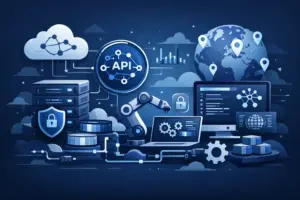
Provisioning a server from a dashboard feels fast – until you need to do it 40 times, across regions, with the same firewall rules, DNS changes, backups, and teardown logic every week. That is where api driven infrastructure automation stops being a nice idea and starts being a practical requirement.
For developers, DevOps teams, and startups, the real value is not automation for its own sake. It is repeatability. It is the ability to create, change, protect, and remove infrastructure with the same level of control you expect from application code. When infrastructure can be managed through an API, it becomes scriptable, testable, and easier to fit into CI/CD, platform tooling, and now AI-assisted operations.
What api driven infrastructure automation actually means
At a basic level, api driven infrastructure automation means using APIs to provision and manage cloud resources instead of relying on manual point-and-click administration. A server, firewall rule, DNS record, snapshot, or network setting is created by sending a request, not by opening multiple browser tabs and hoping every step is documented somewhere.
That sounds simple, but the shift is bigger than it looks. Once infrastructure actions are exposed through an API, they can be triggered by deployment pipelines, internal tools, scheduled jobs, self-service portals, and AI workflows. The infrastructure layer stops being a manual bottleneck and starts behaving like a programmable system.
This is different from automation that still depends on human setup in the middle of the process. If someone has to log in and finish the last few steps by hand, your speed and consistency still depend on that person being available, careful, and experienced.
Why technical teams are moving in this direction
Most teams do not adopt API-first infrastructure because it sounds modern. They adopt it because manual operations break down under growth.
A startup may begin with one or two servers and a basic deployment routine. A few months later, the same team is managing staging environments, production workloads, failover plans, multiple regions, and security controls. The original process no longer scales. Every manual step adds delay and increases the chance of configuration drift.
API-driven workflows fix that by turning recurring infrastructure tasks into repeatable actions. Need to launch a test environment for every pull request? Use the API. Need to update DNS as part of a release? Use the API. Need to create and destroy temporary compute for batch jobs or customer demos? Again, use the API.
The gain is not just speed. It is operational clarity. You know what was created, when it happened, and which system or script triggered it.
The core benefits of api driven infrastructure automation
The first benefit is consistency. If every environment is created from the same logic, you reduce the small differences that cause large problems later. Staging starts to look like production. Recovery procedures are easier to trust. New regions are less painful to bring online.
The second benefit is faster delivery. Infrastructure stops waiting for ticket queues and manual approval chains for routine work. Developers can ship features without sitting behind avoidable operations delays, and DevOps teams can spend less time on repetitive requests.
The third benefit is cost control, although this depends on implementation. APIs make it easier to spin resources up and down on demand, which can reduce waste. But the same speed can also create sprawl if there are no naming rules, lifecycle policies, or ownership tags. Automation removes friction, and that is good only when your guardrails are also automated.
The fourth benefit is integration. API-based infrastructure fits naturally with CI/CD systems, infrastructure-as-code tooling, observability platforms, and internal developer portals. It can also extend into newer workflows, including AI-assisted operations where teams query infrastructure state, trigger actions, or generate operational tasks through compatible tools.
Where manual processes still cause trouble
The most obvious problem is provisioning drift. Two engineers create what is supposed to be the same server, but one forgets a firewall setting, the other selects the wrong region, and no one notices until traffic starts failing.
Another issue is response time. Manual processes slow down deployments, incident recovery, and temporary environment creation. If launching a replacement server during an outage takes 20 minutes of dashboard work, that delay becomes part of your recovery posture.
There is also a staffing problem. Manual infrastructure management concentrates knowledge in a few people. The team that knows the hidden setup steps becomes the team everyone waits on. API-driven automation spreads that operational knowledge into code, scripts, and documented workflows.
How to implement it without creating new problems
The best starting point is not full automation of everything. It is identifying the most repetitive and highest-friction tasks in your current process. For many teams, that means server provisioning, DNS updates, snapshots, security rule changes, and temporary environment lifecycle management.
From there, standardize the inputs before you automate the outputs. If your team has no naming convention, no environment labels, and no clear policy for regions or instance sizes, the API will only help you make inconsistent decisions faster.
Next, make your automation predictable. Use version-controlled scripts or infrastructure definitions. Keep secrets out of ad hoc shell history. Log actions. Build idempotent processes where possible, so rerunning a job does not create duplicate resources or half-finished states.
Then add guardrails. That can mean approval steps for destructive actions, resource tagging for ownership, time-based cleanup for temporary infrastructure, and budget monitoring around automated provisioning. Good automation reduces human error. Bad automation repeats it at machine speed.
API driven infrastructure automation in real workflows
A common example is application deployment. A pipeline pushes code, runs tests, provisions or updates the target environment through the API, applies DNS or networking changes, and validates the result. The process is faster, but more importantly, it is repeatable.
Another example is startup scaling. A team launches in one geography, gains users in another, and needs to deploy closer to customers without rebuilding its operating model. With API-driven infrastructure, region expansion becomes a workflow problem, not a manual rebuild from scratch.
Security operations also benefit. Firewall changes, DDoS-related traffic routing, and service exposure rules can be handled in a controlled, logged way instead of through rushed dashboard updates during incidents.
For teams experimenting with AI operations, the model gets even more interesting. API-exposed infrastructure can be connected to AI-compatible systems so teams can query resource status, trigger routine tasks, or streamline operations through natural language interfaces tied to real infrastructure actions. That only works when the infrastructure layer is already programmable.
Choosing the right platform matters
Not every cloud platform is equally useful for this approach. Some offer APIs that technically work but are hard to understand, inconsistent across services, or too limited for real operational use. Others provide broad automation potential but bury teams under pricing complexity and platform sprawl.
For most growing teams, the best fit is usually a platform that gives you fast deployment, clear API access, predictable pricing, and enough global coverage to support real workloads without turning routine operations into architecture projects. That matters more than a massive service catalog if your actual goal is to deploy applications, manage infrastructure cleanly, and keep control as you scale.
This is where a developer-first cloud platform can make a real difference. LetsCloud, for example, aligns well with API-driven operations by combining cloud servers, DNS, security layers, and straightforward automation capabilities in a simpler operating model. For teams that also want to connect infrastructure to AI-assisted workflows, MCP support adds another layer of practical value.
What success looks like
Success is not having the most advanced automation stack in your market. It is being able to launch, change, protect, and retire infrastructure with less delay and less inconsistency.
A healthy setup usually looks boring in the best way. Environments are reproducible. Routine operations do not depend on tribal knowledge. Deployments move faster because infrastructure is part of the workflow, not an exception to it. Temporary resources get cleaned up. Security settings are applied the same way each time.
There are trade-offs, of course. API driven infrastructure automation requires discipline. You need standards, review habits, and basic operational design. If your team skips that groundwork, automation can spread confusion instead of reducing it.
But for teams building products, scaling services, or running customer-facing workloads across regions, the alternative is usually worse. Manual infrastructure does not stay manageable for long. It just stays familiar until growth exposes its limits.
The smart move is to start where repetition already exists, automate what should never require handwork twice, and build from there. When infrastructure becomes programmable, your team gets faster – but more importantly, it gets room to operate with far less friction.